A Journey Through the History of Lace: an Open Lecture by Dr. Raffaele Dessì
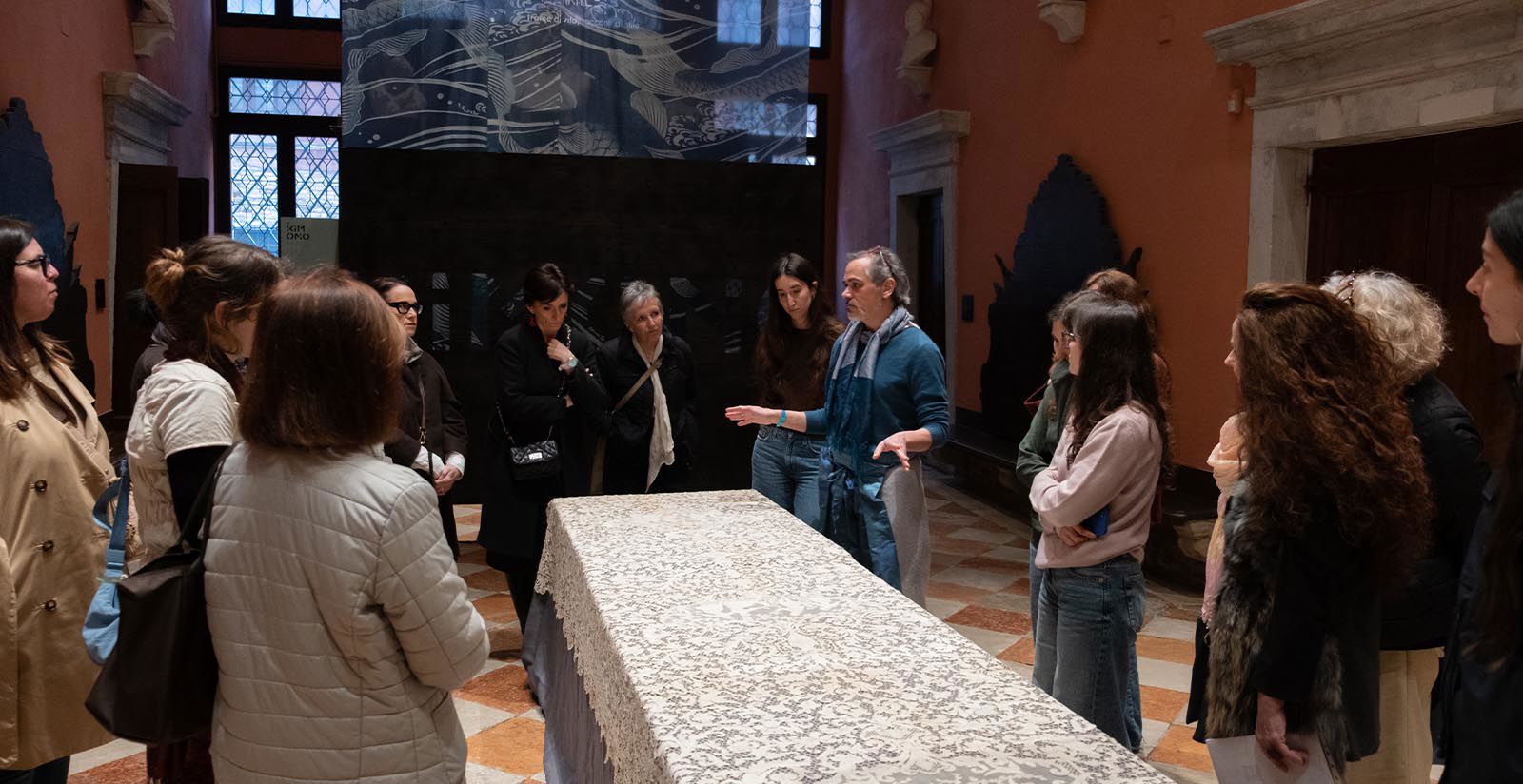
Yesterday marked the second lesson of the module dedicated to Burano lace, part of the training programme promoted by The Place of Wonders Foundation. A particularly meaningful moment, designed to guide our scholarship students towards a deeper understanding of this craft.
Following a more intimate first session held at the Martina Vidal atelier and reserved for the students, we chose to open this second appointment to the public, turning it into an opportunity to share a form of knowledge that is as delicate as it is precious.
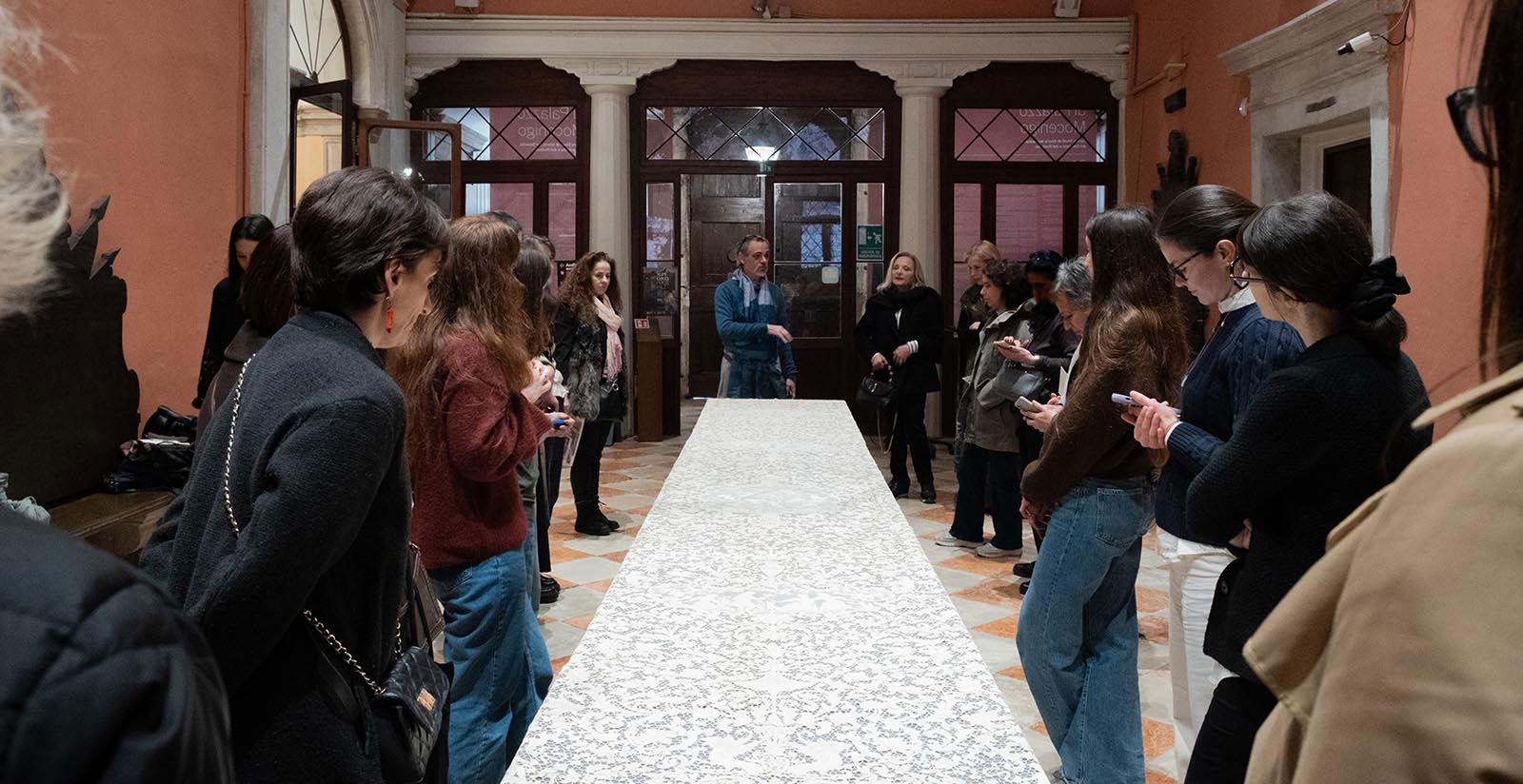
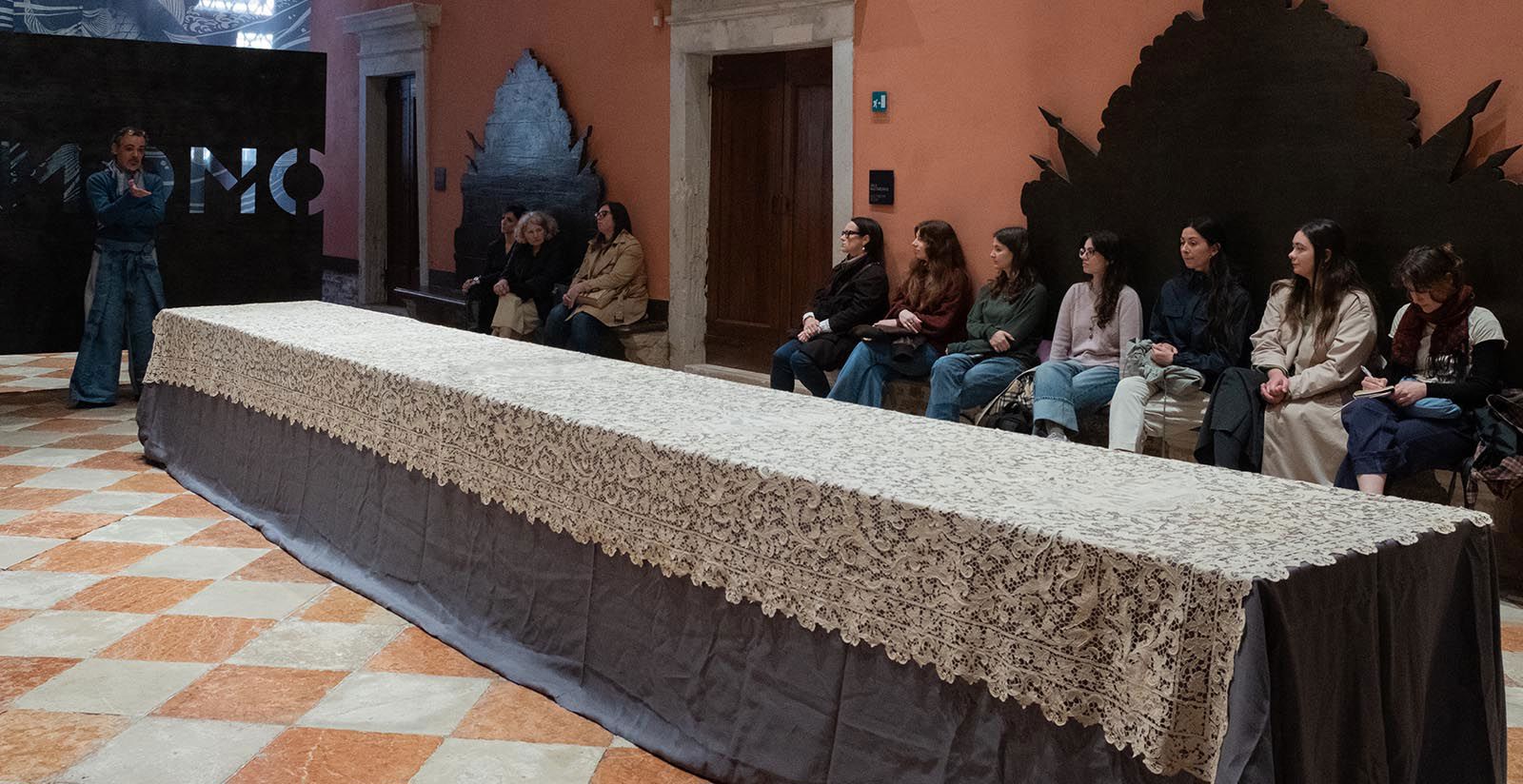
The lecture took place in the rooms of Palazzo Mocenigo Museum, a Venetian museum dedicated to the history of textiles and costume, which provided the ideal setting for such an in-depth exploration. A place where lace naturally finds its historical and cultural dimension, beyond its technical aspects.
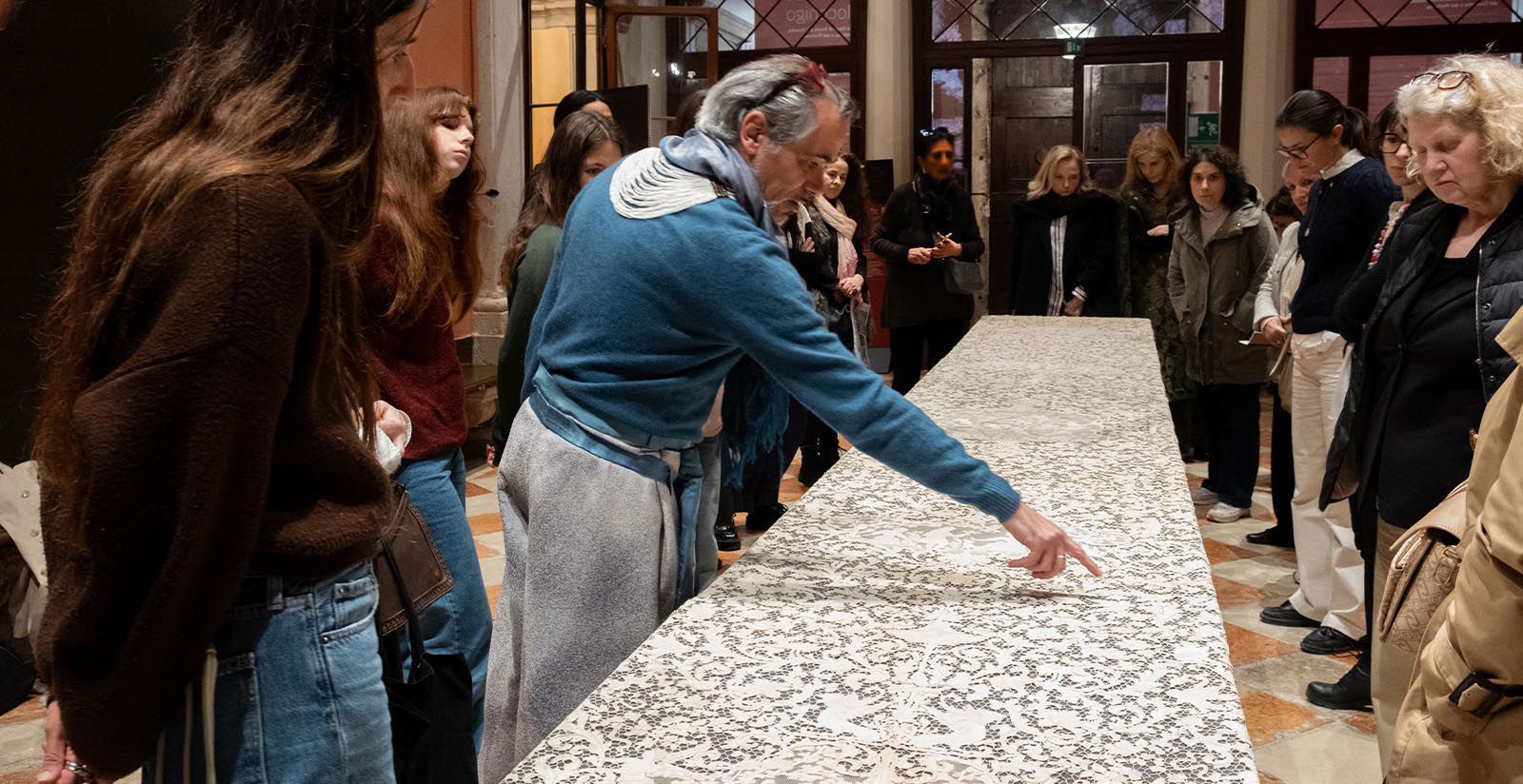
Led by Dr. Raffaele Dessì, participants were guided through a journey retracing the origins and evolution of lace, highlighting the role this art has played within Venetian society. A narrative that restores depth to a craft often admired only for its aesthetic qualities, yet one that holds centuries of history, technique and identity.
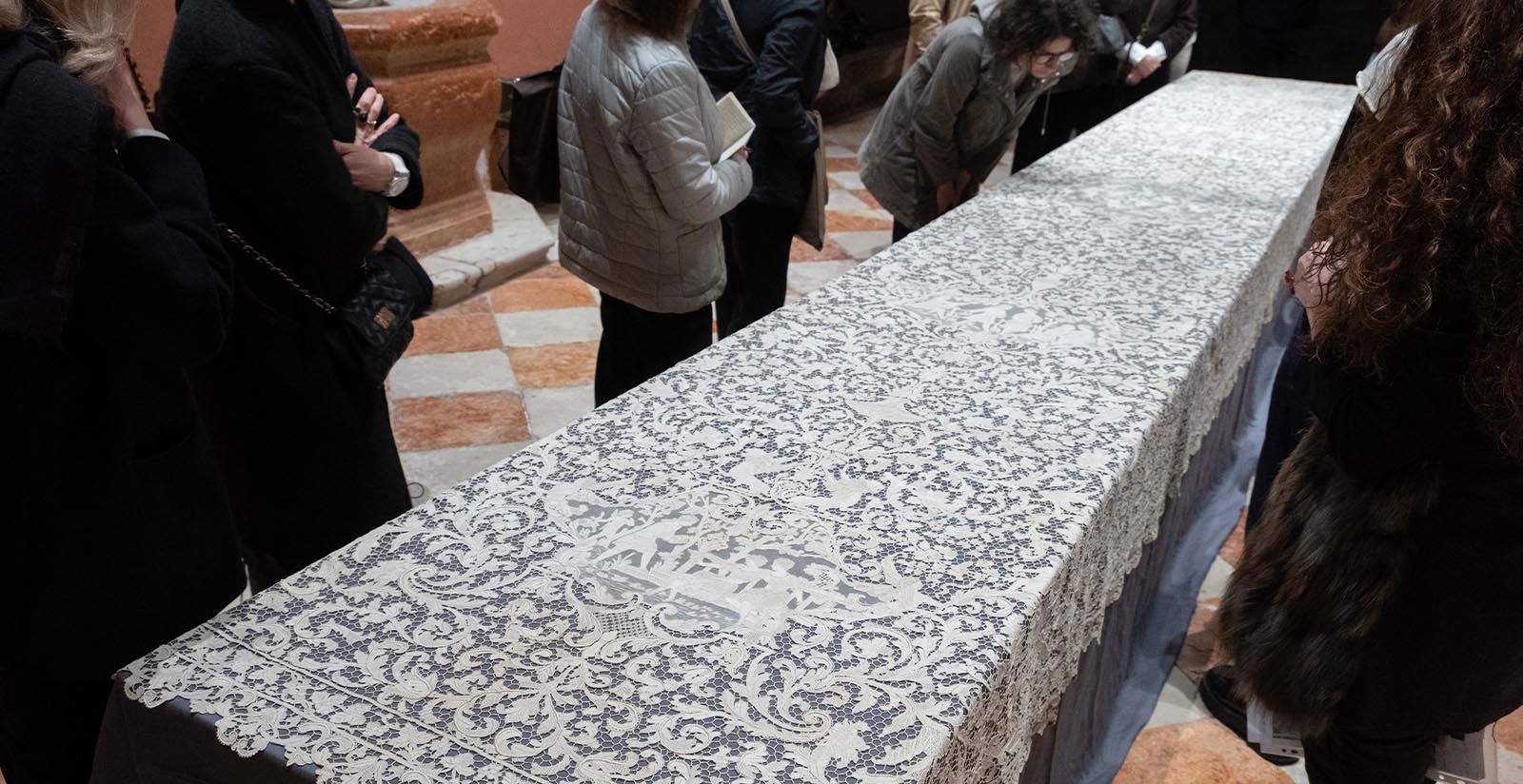
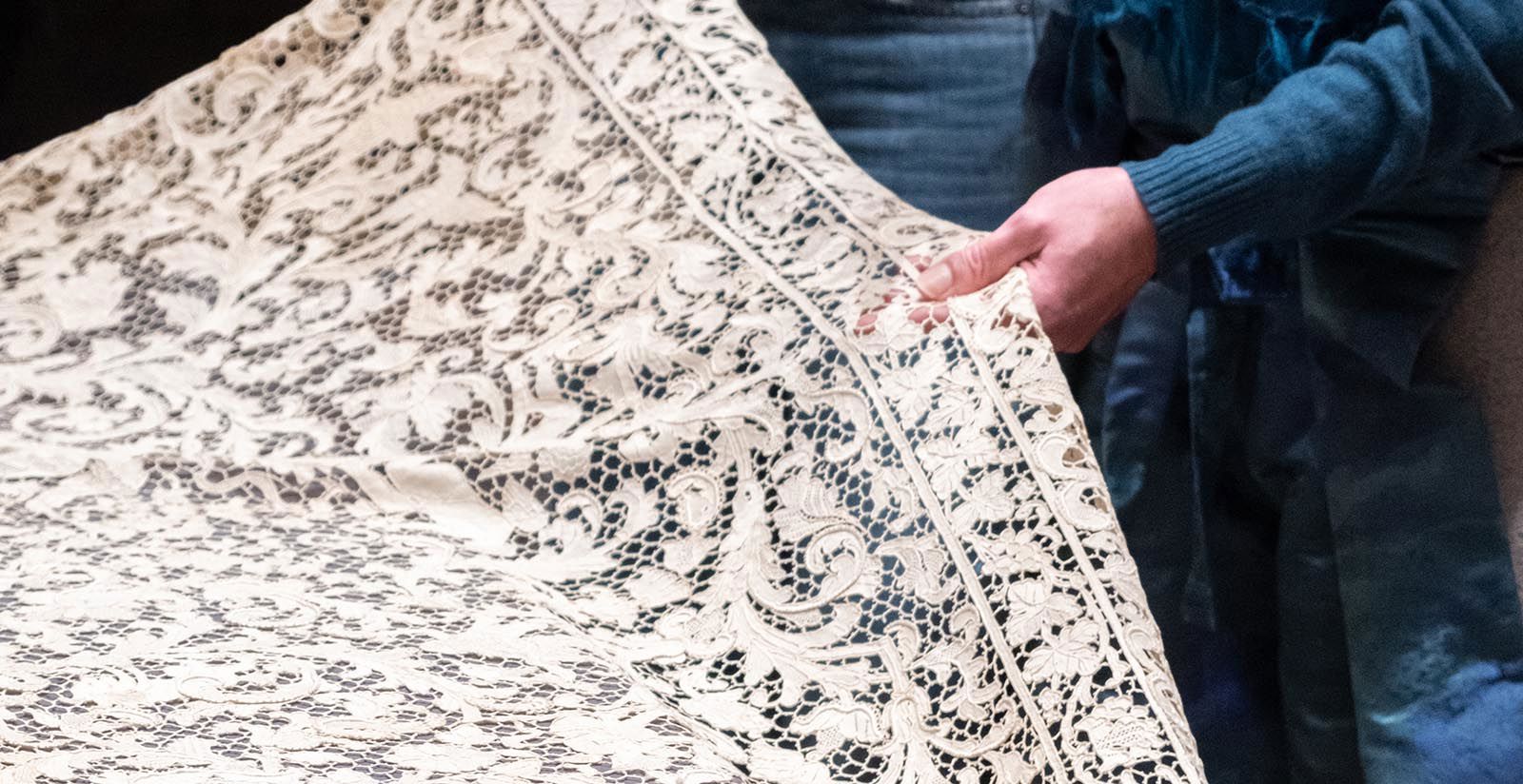
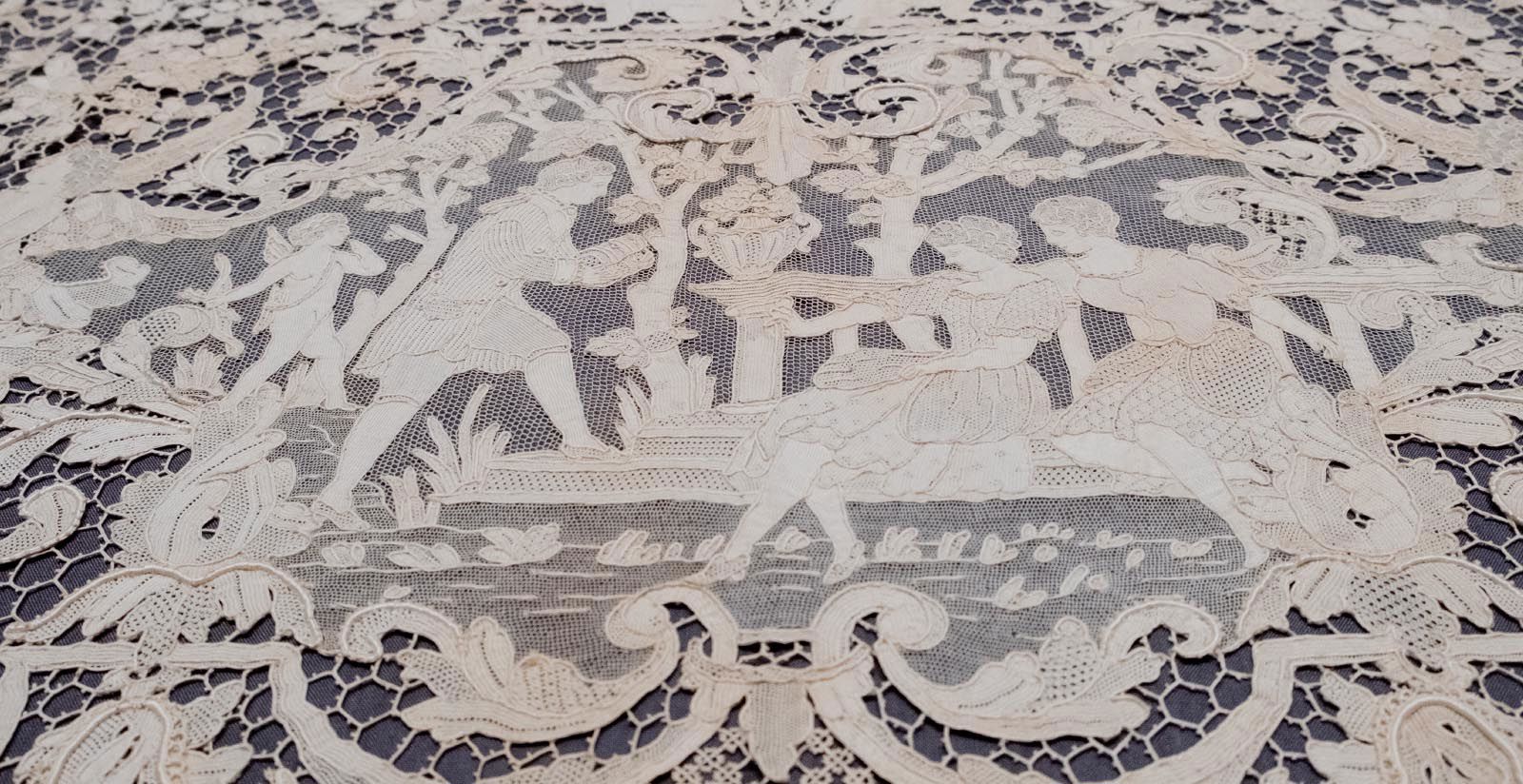
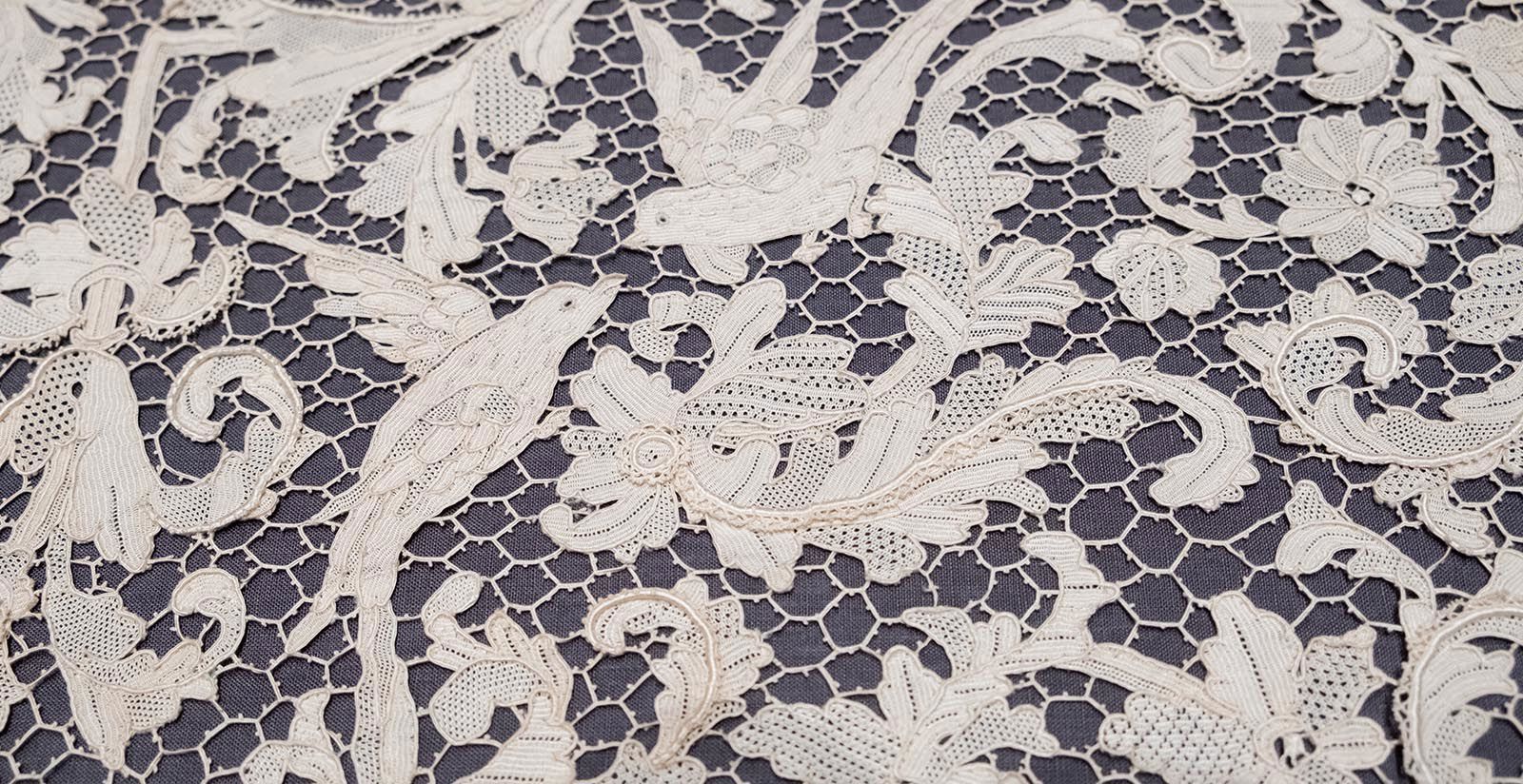
Making the experience even more remarkable was the opportunity to closely observe an extraordinary artefact: a large tablecloth measuring 600 x 150 cm, entirely made in needle lace and dating from the late 18th to the early 19th century. The minuteness of the work, the complexity of the stitches and the richness of its details make it an exceptionally rare piece, one that would be almost impossible to reproduce today with the same level of precision and time dedication.
The visit then continued through the museum spaces, where participants could linger on several paintings depicting women in period dress. In these works, lace emerges not only as a decorative element, but as a key to interpreting time itself. As highlighted during the visit, fashion allows us to date periods, understand social hierarchies and grasp cultural transformations.
Initiatives like this stem from the belief that safeguarding craft traditions also requires knowledge. Because it is only by truly understanding the value of what we observe that we can learn to recognise it, support it, and ultimately ensure its continuity.